Today
20
in History
26
January
February
March
April
May
June
July
August
September
October
November
December
01
Mon
02
Tue
03
Wed
04
Thu
05
Fri
06
Sat
07
Sun
08
Mon
09
Tue
10
Wed
11
Thu
12
Fri
13
Sat
14
Sun
15
Mon
16
Tue
17
Wed
18
Thu
19
Fri
20
Sat
21
Sun
22
Mon
23
Tue
24
Wed
25
Thu
26
Fri
27
Sat
28
Sun
29
Mon
30
Tue
...
06-04-1919
Congress passes the 19th Amendment, paving the way for women to vote
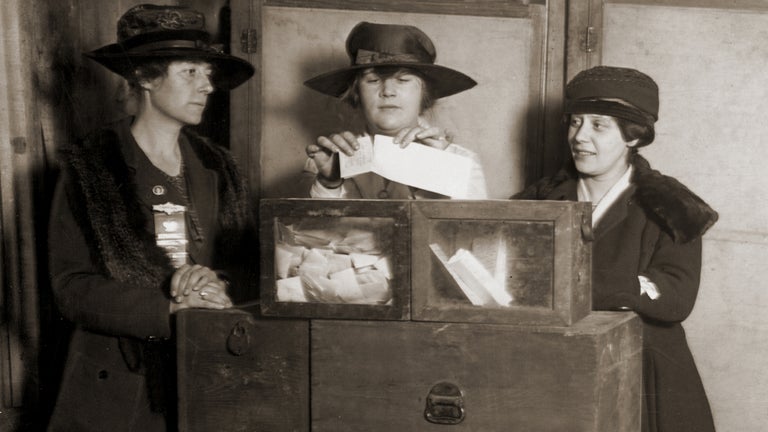
The 19th Amendment to the U.S. Constitution, granting women the right to vote, is passed by Congress and sent to the states for ratification.
The women’s suffrage movement was founded in the mid-19th century by women who had become politically active through their work in the abolitionist and temperance movements. In July 1848, 240 woman suffragists, including Elizabeth Cady Stanton and Lucretia Mott, met in Seneca Falls, New York, to assert the right of women to vote. Female enfranchisement was still largely opposed by most Americans, and the distraction of the North-South conflict and subsequent Civil War precluded further discussion. During the Reconstruction Era, the 15th Amendment was adopted, granting African American men the right to vote, but the Republican-dominated Congress failed to expand its progressive radicalism into the sphere of gender.
In 1869, the National Woman Suffrage Association, led by Susan B. Anthony and Elizabeth Cady Stanton, was formed to push for an amendment to the U.S. Constitution. Another organization, the American Woman Suffrage Association, led by Lucy Stone, was organized in the same year to work through the state legislatures. In 1890, these two societies were united as the National American Woman Suffrage Association. That year, Wyoming became the first state to grant women the right to vote.
By the beginning of the 20th century, the role of women in American society was changing drastically; women were working more, receiving a better education, bearing fewer children, and several states had authorized female suffrage. In 1913, the National Woman’s party organized the voting power of these enfranchised women to elect congressional representatives who supported woman suffrage, and by 1916 both the Democratic and Republican parties openly endorsed female enfranchisement. In 1919, the 19th Amendment, which stated that “the rights of citizens of the United States to vote shall not be denied or abridged by the United States or by any State on account of sex,” passed both houses of Congress and was sent to the states for ratification. Eight days later, the 19th Amendment took effect.
Despite the passage of the amendment and the decades-long contributions of Black women to achieve suffrage, poll taxes, local laws and other restrictions continued to block women of color from voting. It would take another 50 years for all women to achieve voting equality.
More news today
loading...