Today
20
in History
26
January
February
March
April
May
June
July
August
September
October
November
December
01
Wed
02
Thu
03
Fri
04
Sat
05
Sun
06
Mon
07
Tue
08
Wed
09
Thu
10
Fri
11
Sat
12
Sun
13
Mon
14
Tue
15
Wed
16
Thu
17
Fri
18
Sat
19
Sun
20
Mon
21
Tue
22
Wed
23
Thu
24
Fri
25
Sat
26
Sun
27
Mon
28
Tue
29
Wed
30
Thu
31
Fri
...
07-18-1986
Video of Titanic wreckage released
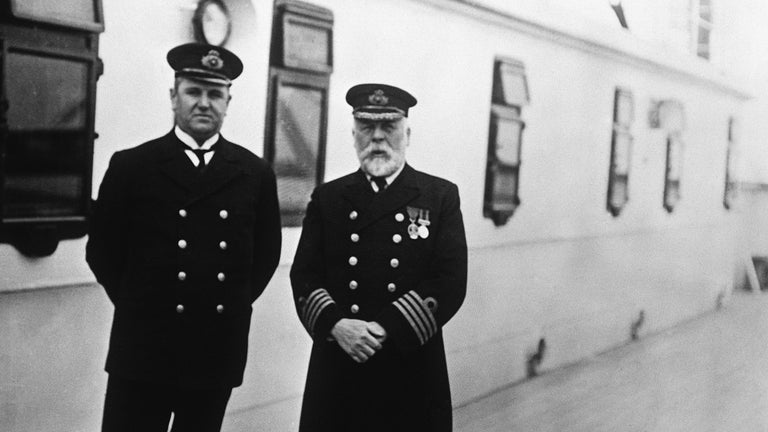
On July 18, 1986, new close-up videotapes of the sunken ocean liner Titanic are released to the public. Taken on the first manned expedition to the wreck, the videotapes are stunning in their clarity and detail, showing one of the ship’s majestic grand staircases and a coral-covered chandelier swinging slowly in the ocean current.
At the time of its launch, the RMS Titanic was the largest ocean liner ever built, measuring nearly 900 feet long and 150 feet from its water line to its highest beam. It was considered unsinkable owing both to its vast size and its special construction. On its maiden voyage, the Titanic carried more than 2,200 people, including several of the world’s most rich and famous. Its collision with an iceberg and subsequent sinking in the icy waters of the North Atlantic resulted in the death of some 1,500 people, many of whom could have been saved if the ship had carried a sufficient number of lifeboats.
It was not until 73 years later, in 1985, that the Titanic wreck was discovered. Marine geologist Robert Ballard, in conjunction with Jean-Louis Michel of the Institute of Research for the Exploitation of the Sea (IFREMER), located the remains of the Titanic 350 miles southeast of Newfoundland, 13,000 feet down on the ocean floor. Ballard, who was from Massachusetts’ Woods Hole Oceanographic Institute, had the help of the U.S. Navy, which supplied him with Argo, a high resolution sonar device and submersible photographic sled.
Ballard’s discovery caused a great stir among the public, and touched off a new era in underwater exploration and scientific research, especially around the topic of the Titanic. The following year, Ballard returned to the wreck, this time to dive down to the bottom in a submersible craft called Alvin and acquire photo footage of the ghost ship. Ballard was accompanied by Ralph Hollis, the Alvin‘s pilot, and Mark Bowen, who piloted Jason, Jr., a robotic submarine, or “swimming eyeball,” used to explore the interior of the liner. Two miles beneath the surface, the explorers found, frozen in time, trappings of life aboard the Titanic, including a wood-burning stove and unopened champagne bottles being readied for a toast. Jason, Jr. also found the ship’s safes, but left them as they lay: It was decided that the Titanic expedition would leave the ship’s debris undisturbed on the ocean floor.
Even after several years of visiting the wreckage, not a trace of human remains has been found. Like other soft, degradable materials such as wood and carpet, human body parts were most likely scavenged by sea creatures not long after the ship’s sinking.
More news today
loading...